Shipping, Freight & Customs
Sea Freight vs. Air Freight from China: How to Choose for Your Next Shipment
The decision usually comes down to three factors: how much you're shipping, how fast you need it, and your margin per unit.
9 min
read
·
An article by

Amazon FBA Specialist
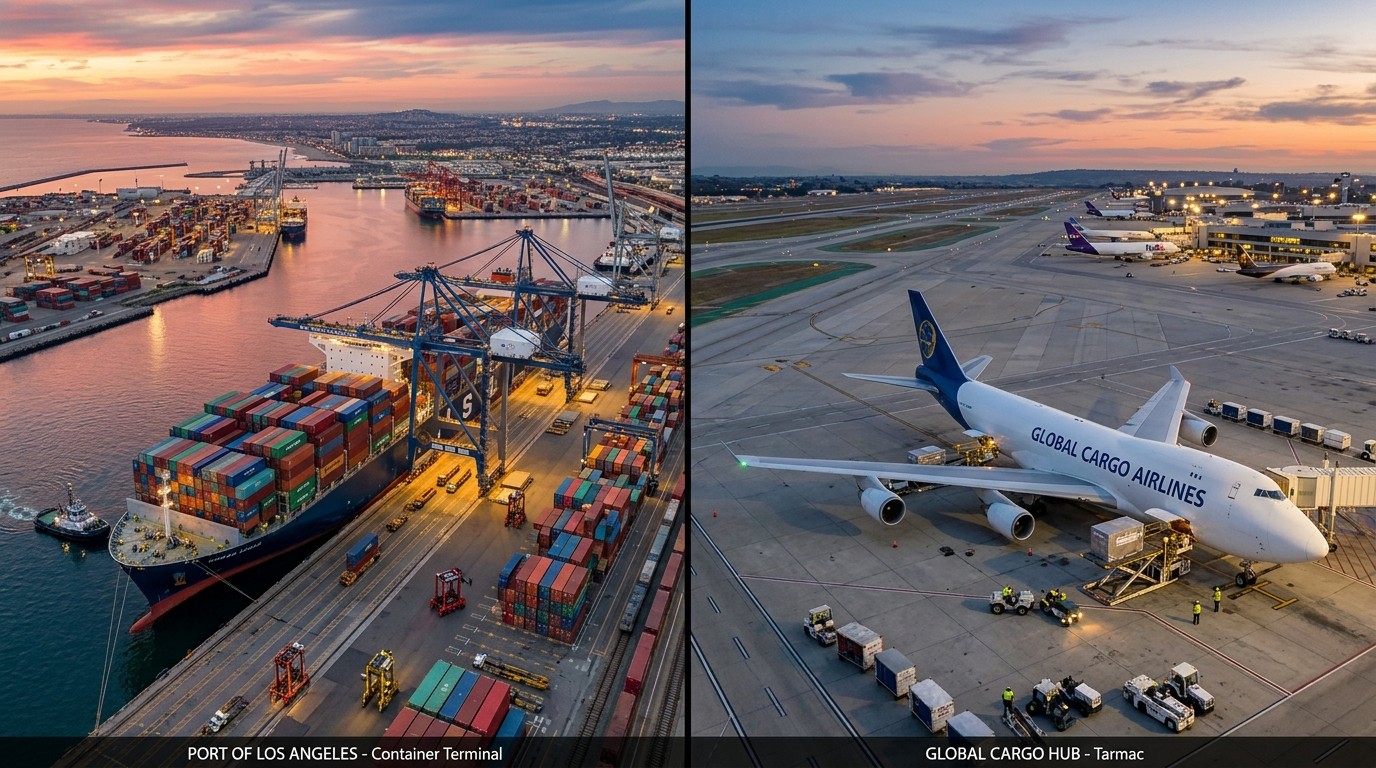
Sea freight is dramatically cheaper per unit at volume - a full container (FCL) or shared container (LCL) can move thousands of units for a fraction of the per-kg cost of air freight.
The trade-off with sea freight is time: 25-45 days door to door depending on origin port, destination, and customs, plus the fact that your capital is tied up in transit inventory that whole time.
Air freight moves in 5-10 days door to door but costs several times more per kilogram.
Air freight makes sense for low-volume, high-value items, urgent restocks when you're about to go out of stock on Amazon, or the first order of a new product where speed to market matters more than shipping cost.
FCL (full container) makes sense once your order fills roughly 60 percent or more of a 20-foot container; below that, LCL (shared container) is usually cheaper even though it takes a few extra days for consolidation at the origin port.
A common mistake: choosing air freight for a full first order out of impatience, then realizing the freight cost ate most of the margin.
A better approach for many sellers is a small air shipment to avoid a stockout while the bulk of the order moves by sea - getting speed where it matters and cost savings on the volume that doesn't need to rush.
We quote both options on every shipment, broken down by cost, transit time, and landed cost per unit, so you can compare the real trade-off side by side before deciding.