Warehousing & 3PL
Consolidating Shipments from Multiple Chinese Factories: A Step-by-Step Guide
If you're sourcing a product line from three different factories — say, packaging from one supplier, the core product from another, and an accessory from a third — shipping each separately means paying full freight and customs fees three times over for what could be one shipment.
4 min
read
·
An article by

Customs & Compliance Specialist
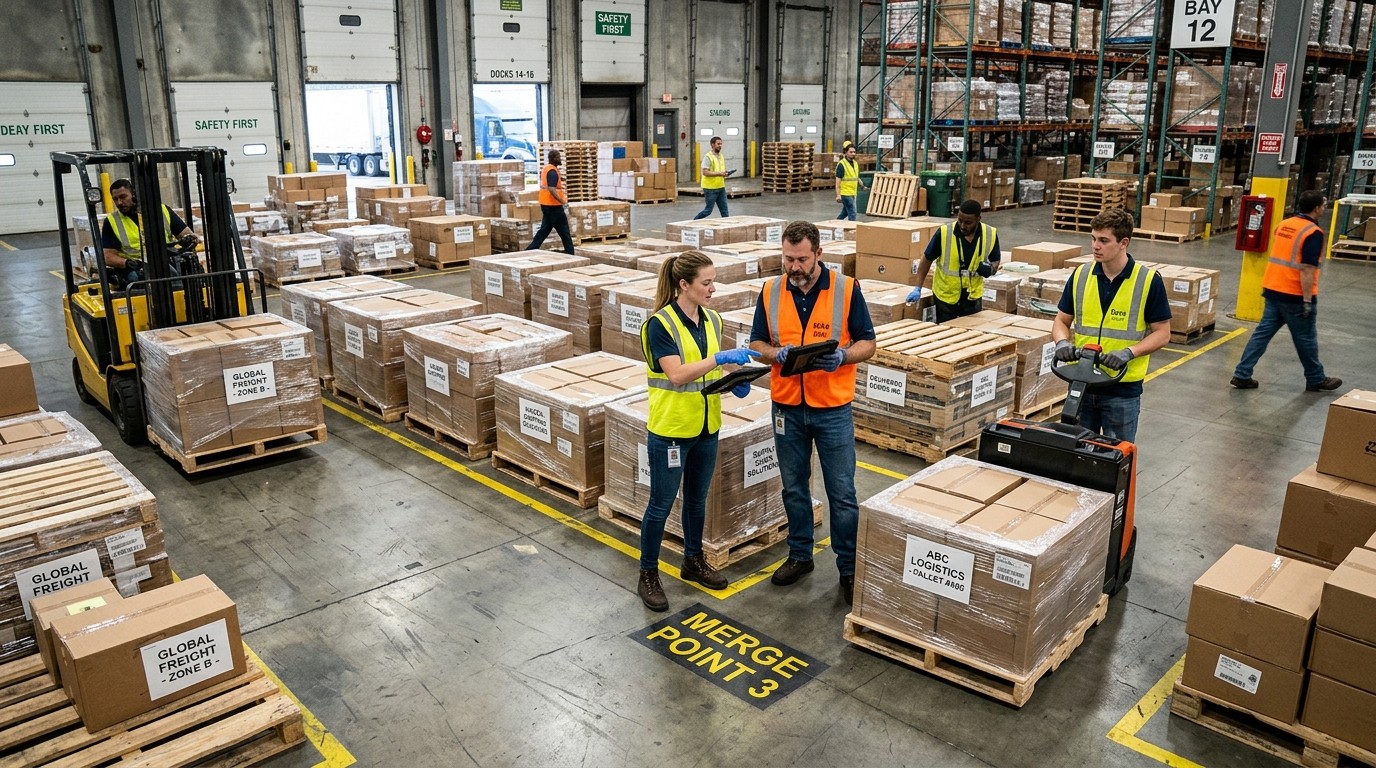
Consolidation works like this: each factory ships their portion (usually by domestic trucking, a much smaller cost) to a single warehouse, typically near a major port.
The warehouse receives each shipment, checks quantities against the purchase order, and holds everything until all pieces have arrived.
Once complete, the entire order is repacked (and re-palletized if needed) into one outbound shipment, inspected as a combined order, and booked as a single freight shipment.
The main variable to manage is timing - if one factory runs two weeks behind, the whole consolidated shipment waits for it, unless you decide to split and ship partially.
A good consolidation partner tracks each factory's production timeline and flags delays early enough to make that call before it becomes a last-minute problem.
The cost savings are significant: one set of freight and customs fees instead of three, and one inspection process instead of separate inspections at each factory.
This is a core part of what we manage for clients sourcing multi-component products, and it typically cuts total logistics cost by 15-30 percent compared to shipping each supplier's output separately.